10 First-Time Home Buyer Tips | Lesser Lending
The smoothest first-time purchases we close have something in common: most of the important work happens before the first showing. A plan, a clear budget, and a lender who walks you through the options.
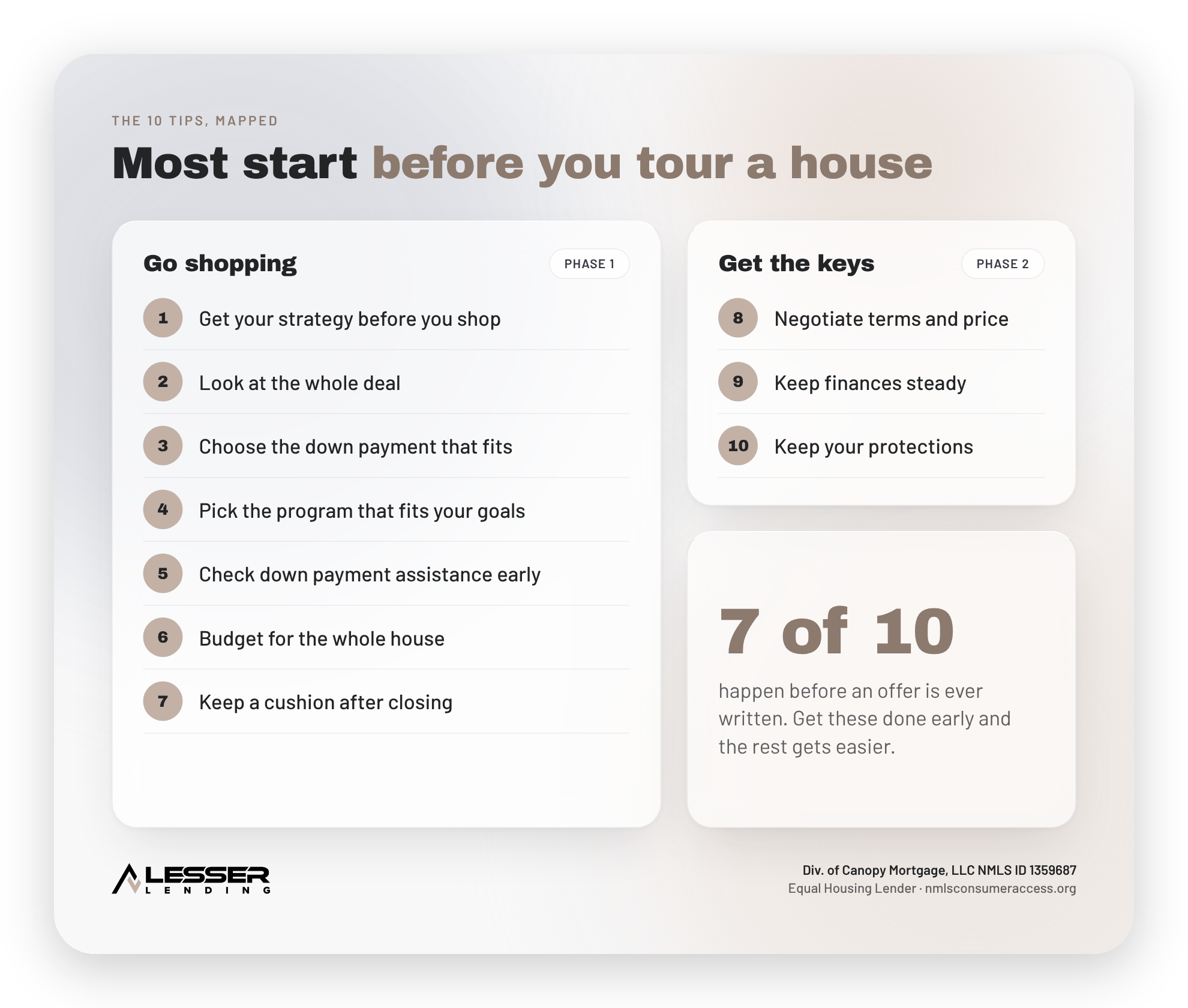
Here are the 10 things we see our smoothest first-time buyers do, roughly in the order they happen.
The short version:
Build your strategy before you shop for the house.
Look at the whole deal, not just the rate.
Keep your finances steady until you have keys.
Before you shop
1. Get your strategy before you shop
Touring homes is the fun part. Getting your plan together first makes the touring even better.
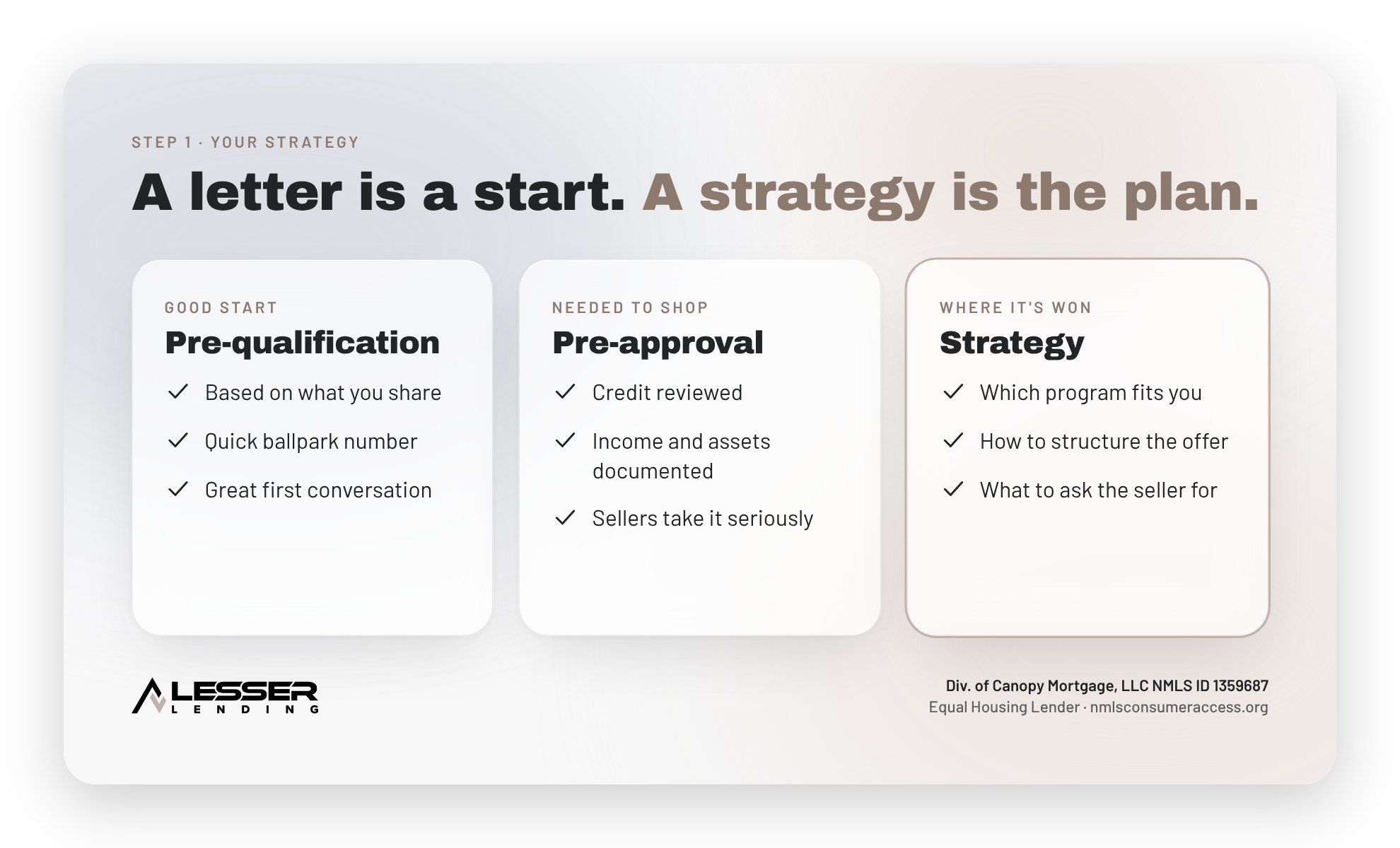
A pre-qualification is a ballpark based on what you share with a lender. A pre-approval means your credit has been reviewed and your income and assets documented, which is why sellers and agents take it seriously. Here's the part nobody tells you: a pre-approval letter says how much you can borrow. A strategy tells you how much you want to spend, which program fits, and how to structure the offer.
Every consultation we do starts with four things: cash, income, credit, and expectations. The letter comes out of that conversation.
How to do it: Get pre-approved before your first tour, and ask your lender how they'd structure the loan for your situation, and why. Not sure where to start? Try our Home Buying Game Plan.
2. Look at the whole deal, not just the rate
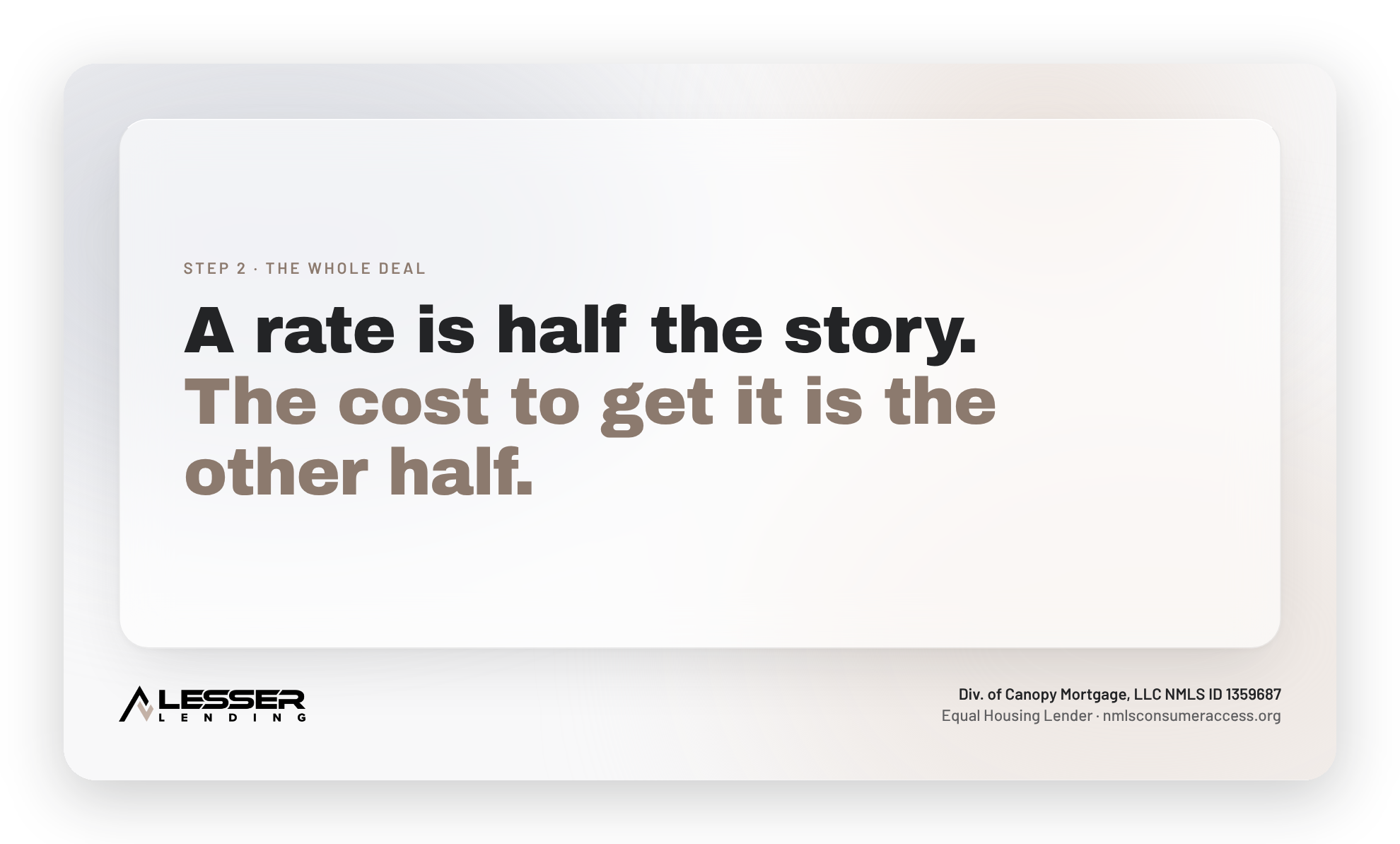
The rate is the number everyone asks about. A rate is half the story. The cost to get it is the other half.
A lower rate can come with points paid upfront. The cost to close, mortgage insurance, credits, and how long the rate is locked all shape what you actually pay. A good lender walks you through all of it, without you having to dig.
Ask your lender this: "What am I paying for this rate, and what would it look like with no points?" Then ask them to walk you through the APR, fees, credits, and lock period on your Loan Estimate. If the answer is clear and quick, you're in good hands. Want to see how rate and cost trade off before that conversation? Our Rate Comparison tool lays it out.
3. Choose the down payment that fits you
Putting 20% down on a conventional loan means no private mortgage insurance. That's a real benefit, and for some buyers it's the right call.
According to the CFPB, you have "the right to ask your servicer to cancel PMI on the date the principal balance of your mortgage is scheduled to fall to 80 percent of the original value of your home," and in general your servicer must "automatically terminate PMI on the date when your principal balance is scheduled to reach 78 percent of the original value of your home." That's the CFPB's general guidance, not a quote, and your actual PMI timeline depends on your credit, loan, and program.
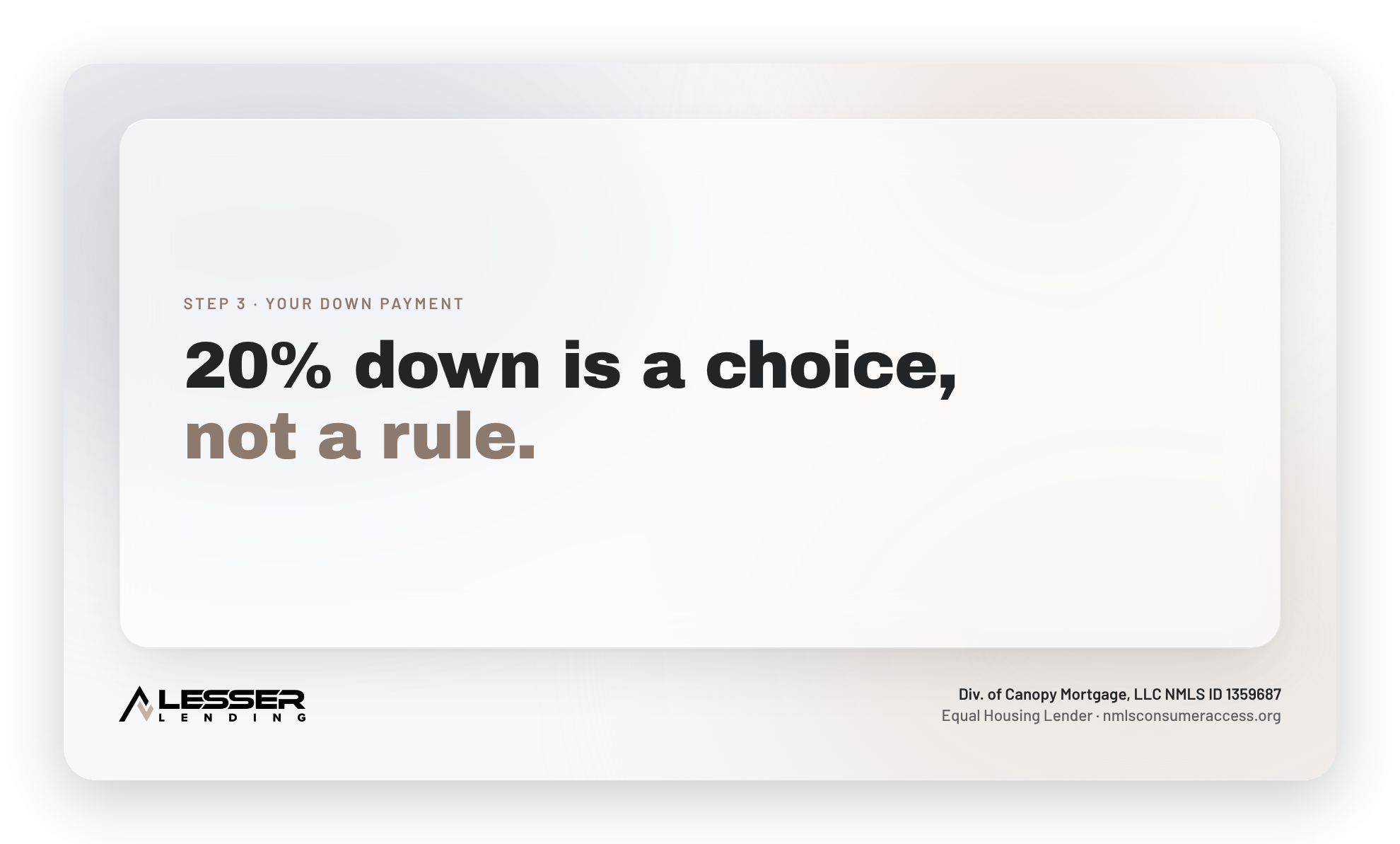
20% down is a choice, not a rule. Could you put 20% down? Sure. Should you? Different question.
Ask your lender this: "Which down payment fits my goals, and why?"
4. Pick the loan program that fits your goals
Every loan program is a tool, and each one is built for something.
FHA can be a strong choice for a lot of buyers, including some with great credit, depending on the numbers. VA can potentially allow no down payment for eligible veterans and service members. USDA eligibility reaches plenty of areas outside Spokane city limits, and you can check any address on the USDA eligibility map. As an Army veteran, I'll say this plainly: if you earned the VA benefit, it's worth a look.
How to do it: Ask your lender which program fits your situation best, and why. Veterans can start with our VA Eligibility tool.
5. Check down payment assistance early
Down payment assistance helps a lot of first-time buyers, and income limits are often higher than people expect.
In Washington, the Washington State Housing Finance Commission runs some of the strongest programs available. Idaho buyers have options through Idaho Housing and Finance Association. Paired with seller credits, assistance can potentially bring cash to close way down in a lot of scenarios. Most programs require a homebuyer education class, so it's worth taking early.
How to do it: See what you might qualify for with our Down Payment Assistance tool, then ask your lender whether assistance makes sense for your situation.
6. Budget for the whole house, not just the payment
Your mortgage payment usually includes principal, interest, property taxes, and homeowners insurance, plus mortgage insurance and HOA dues if they apply. Then there are the costs that never show up on a Loan Estimate: utilities, maintenance, and the lawn mower you didn't know you needed.
Local note: taxes and insurance change across county and state lines. The same price home in Spokane County and Kootenai County won't carry the same escrow, so budget from local numbers.
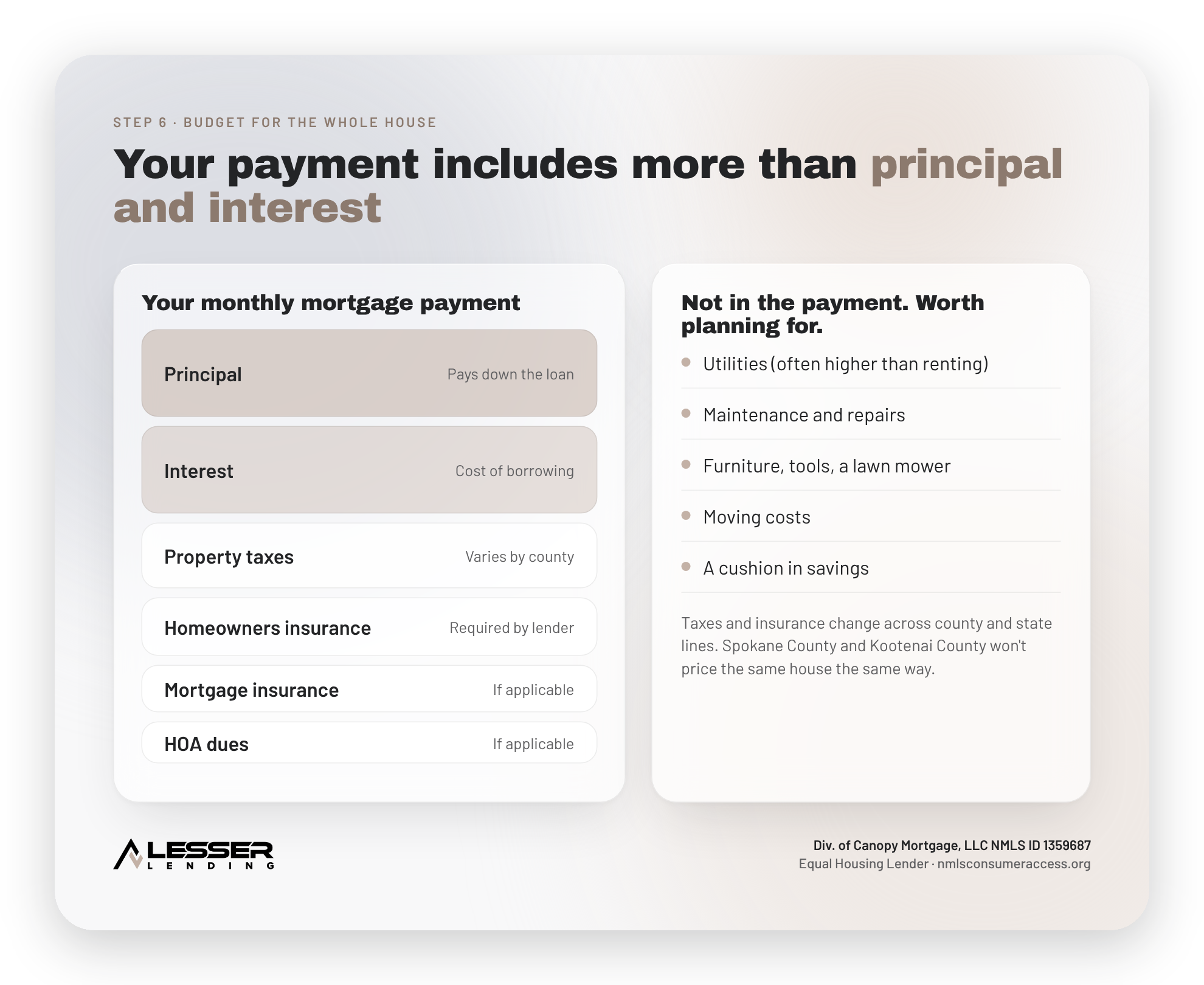
How to do it: Pick a payment you're comfortable with first, then work backward to a price. Our Affordability tool does exactly that.
7. Keep a cushion after closing
Plan for your down payment and closing costs, then keep some savings on top. Homes have a way of needing things in the first year, and a cushion makes those moments easy.
If the numbers only work by using every dollar, there's usually a better structure: a different program, a smaller down payment, assistance, or asking the seller to help with costs (more on that next). The best closings leave room in the budget.

Under contract
8. Negotiate terms as well as price
Price is the obvious lever. Terms can be just as powerful.
A $10,000 price reduction lowers your loan amount a little. The same $10,000 as a seller credit, within program limits, can go toward closing costs, prepaid items, or a rate buydown. That can change what you bring to closing or what your payment looks like in the first year. Which one helps more depends on your file.
Ask your lender this: "Would a price cut or a seller credit help me more?" A good lender can tell you which one does more for your file. Seller credits are never automatic, and limits vary by program.
9. Keep your finances steady until closing
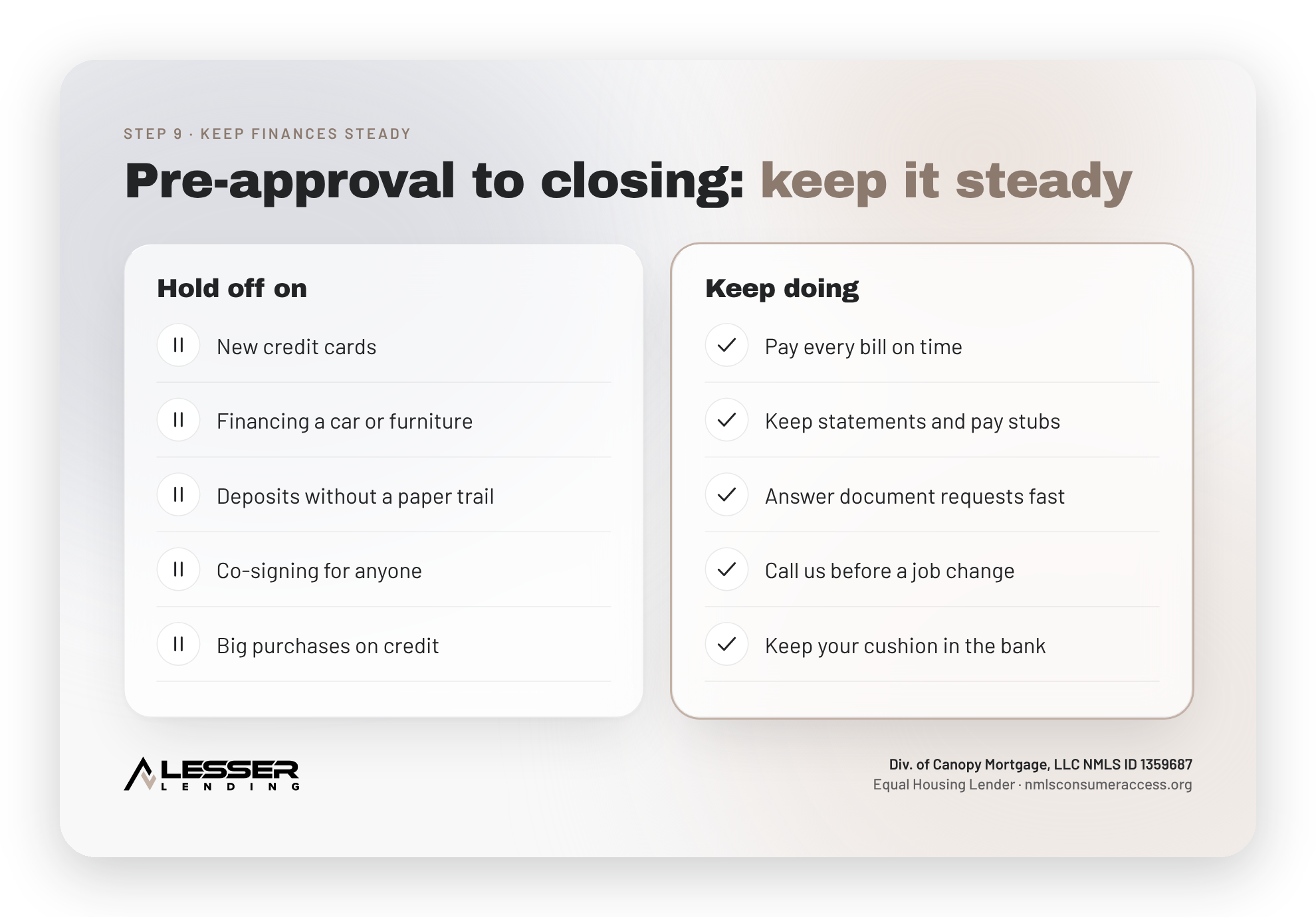
Lenders re-check credit, employment, and accounts before closing. Keeping things steady from pre-approval to keys keeps your file moving and closing day on schedule.
That means holding off on new credit and big purchases, keeping a paper trail for deposits, and giving us a quick call before a job change or any big money move.
10. Keep your protections in your offer
An inspection helps you buy with confidence. In a competitive market, there are plenty of ways to stand out while keeping it.
A fully documented pre-approval, a quick, realistic close, flexible possession, or a clean financing contingency can all strengthen an offer. Talk through the options with your agent so your earnest money stays protected.

Five things to do before the first showing
Get fully pre-approved, with your documents reviewed
Ask your lender which loan program fits you best, and why
Check down payment assistance early
Set a comfortable payment, then find the price
Decide what cushion stays in the bank after closing
Build my game plan · Book a call
The bottom line
Almost everything on this list comes down to order. Strategy first, shopping second, finances steady until closing. Get the order right and buying your first home gets a lot easier.
Want us to run the math on your situation? Start here and we'll review available loan options based on your qualifications, or send this to someone shopping right now.
Frequently asked questions
Do I need 20% down to buy my first home?
No. Many loan programs allow much less, and some buyers qualify for down payment assistance. On a conventional loan, putting less than 20% down usually means paying mortgage insurance.
What should I ask my lender before I start shopping?
Ask how much you're approved for, what your full monthly payment would look like, how much cash you'll need to close, and whether down payment assistance or seller credits could help. A good lender answers all four in plain English.
Can the seller pay my closing costs?
Potentially. Seller credits can cover closing costs, prepaid items, or a buydown, within limits that depend on the loan program and your down payment. They're negotiated, never automatic.
Sources: Consumer Financial Protection Bureau, Loan Estimate explainer and guidance on removing private mortgage insurance under the Homeowners Protection Act. USDA Rural Development, Single Family Housing Guaranteed Loan property eligibility map. Washington State Housing Finance Commission, homebuyer and down payment assistance programs. Idaho Housing and Finance Association, homebuyer programs.
Lesser Lending is a Division of Canopy Mortgage, LLC | Equal Housing Lender | NMLS #1359687 (nmlsconsumeraccess.org) | Dave Lesser NMLS #189561 | Licensed in WA and ID | 11917 E Broadway Ave, Suite 201, Spokane Valley, WA 99206 | (509) 749-8587
State Licenses | Privacy Policy | Terms of Use
Licensed by the Department of Financial Protection and Innovation under the California Residential Mortgage Lending Act.
This content is for educational purposes only and is not a commitment to lend. Programs, rates, and terms are subject to change and borrower qualification. All loans subject to credit and property approval. Interactive calculators are self-help tools. All examples are hypothetical and are for illustrative purposes only. Canopy Mortgage is not sponsored by, affiliated with or acting on behalf of Scotsman Guide. Refinance options are subject to qualification requirements and available loan programs. Tax information is general and not tax advice. Consult a tax advisor.



Get the next one
in your inbox.
New articles from the Lesser Lending team, sent as they go live. Just your name and email.
Rather talk it through? Book a call →